How Crypto Indexes Are Built: A Practical Guide for Platforms

Crypto is becoming a recognized asset class, alongside equities, bonds, and real estate. As that happens, the user base shifts: the next wave of investors isn't made up of active traders watching charts all day. It's ordinary customers who want exposure to the market without having to decide which token to back this week.
That’s why more crypto exchanges, brokers, and banks are adding crypto index products to their offering. A crypto index gives users diversified crypto exposure through a single, easy-to-understand investment product, instead of requiring them to choose individual tokens. This guide explains how crypto indexes are constructed, component by component, so your team can understand how these products work before launching one.
What Is a Crypto Index?

A crypto index is a simple way to give users exposure to several cryptocurrencies through one product. Instead of choosing and buying coins one by one, users can access a ready-made portfolio with a single click.
Think of it like the S&P 500, but for crypto. Just as the S&P 500 gives investors exposure to 500 major U.S. companies at once, a crypto Top 10 index lets users invest across the top 10 cryptocurrencies in one click.
Here’s what goes into building one:
1. Investment Universe
The first step in building a crypto index is defining its investment universe: the cryptocurrencies that can be included.

This usually means setting a few basic rules. For example, an index may exclude stablecoins, low-liquidity tokens, or assets below a certain market cap or trading volume. The universe can include all supported assets on a platform, or only a carefully selected group.
Once the investment universe is set, it defines which coins can be included in the index.
2. The segment or theme
Next, the index needs a goal: what is it trying to track? Common options:
All-coins index: holds the whole market, or just the largest coins as a stand-in for it.
Altcoin index: leaves out Bitcoin and tracks everything else.
AI index: holds only tokens tied to AI projects.
Real-world-asset (RWA) index: holds tokens that link traditional assets, like real estate, to the blockchain (for example, ONDO, MKR, CFG, RIO).
Yield-bearing index: pairs volatile coins with yield-earning stablecoins for steadier returns.
Crypto indexes usually fall into two broad categories: pure indexes and mixed indexes. Pure indexes are built only from volatile crypto assets, giving them higher growth potential but also higher volatility. Mixed indexes include more stable, yield-bearing assets, which can help reduce drawdowns - similar to how bonds balance equities in a traditional portfolio.
3. Methodology and weighting
The theme decides which coins go in. After that, two things shape the index: the weights and the method used to set them.
Weights
A weight is simply the share of the portfolio a coin takes up. Say a $1,000 portfolio holds $600 of BTC, $300 of ETH, and $100 of SOL. The weights are: BTC 60%, ETH 30%, and SOL 10%.
Methodology
The methodology is the rule that decides those weights in the first place.
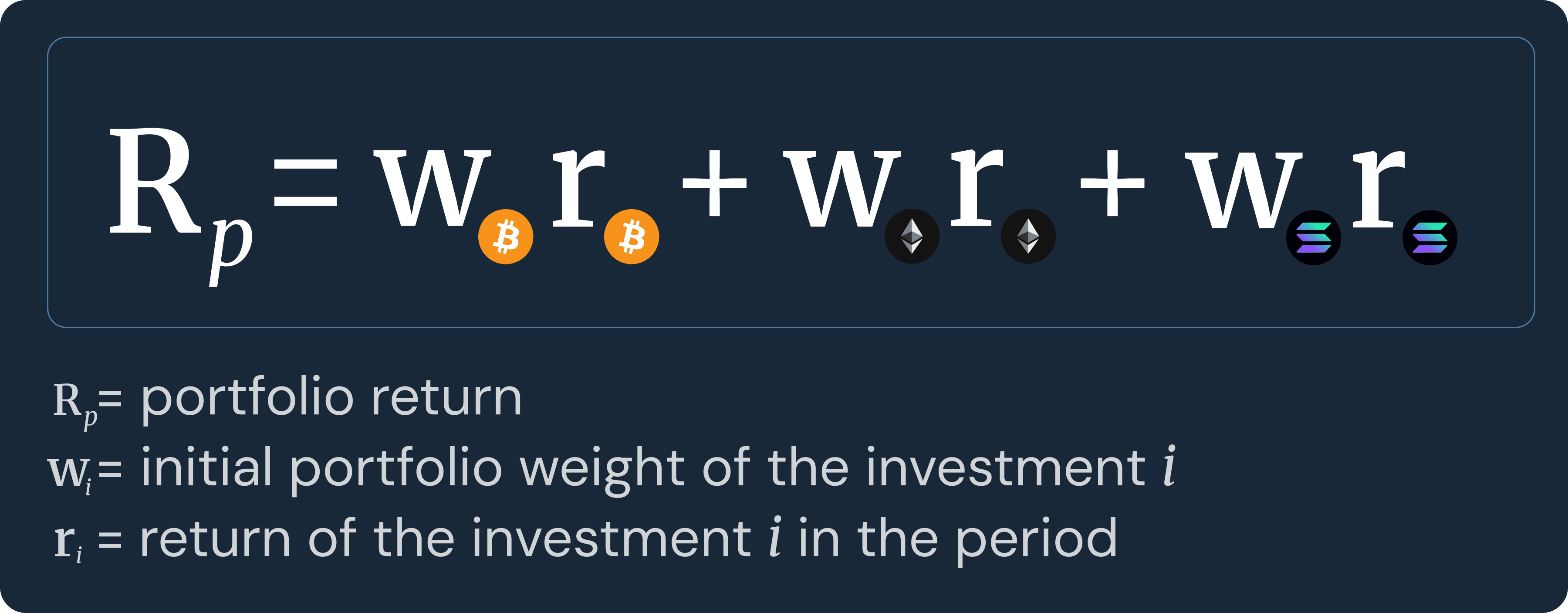
The most common ones are:
Market-cap weighted: bigger coins get a bigger share. Since BTC and ETH are the largest, they take up most of the index, and smaller coins get less.
Risk-balanced — weights are set so each coin adds about the same amount of risk. A steadier coin like BTC may get a larger share, while a more volatile coin gets a smaller one.
Equal weighted: every coin gets the same share. In a ten-coin index, each asset gets 10%, giving smaller coins more influence than they would have in a market-cap-weighted index.
Caps and floors
They help keep the index balanced. A cap prevents one coin from taking up too much of the index - for example, no coin above 25%. A floor makes sure smaller positions do not become too small to matter - for example, no coin below 2%.
4. The signals or indicators
An index can also use signals - data that tells it when and how to adjust. Indexes by Abund are built using signals researched and tested by a team of Quant PhDs. Based on these signals, they can be divided into:
Passive indexes follow a fixed plan no matter what the market does. They're simple, predictable, and cheaper to run.
Smart indexes use market signals to shift their holdings — for example, moving to safer positions in certain conditions. The goal is a "set it and forget it" product that reacts to the market on its own.
Smart indexes suit users who want a more automated way to invest, without having to follow the market every day. Since they require more ongoing logic and management, their fees are usually higher than passive indexes.
5. Rebalancing: what makes it a real index
Rebalancing means regularly resetting the basket back to its target weights and coins.
For example, in a Top 10 equal-weighted index, each coin should make up 10% of the portfolio. If one coin rises in price and grows to 12%, rebalancing sells a small part of it and brings it back to 10%. This keeps the index close to its target allocation.
Rebalancing also updates which coins are included. If a coin falls out of the top 10 by market cap, the index can remove it and add the coin that has taken its place. Without this step, the index would simply keep holding the same assets it started with, even if the market has moved on.
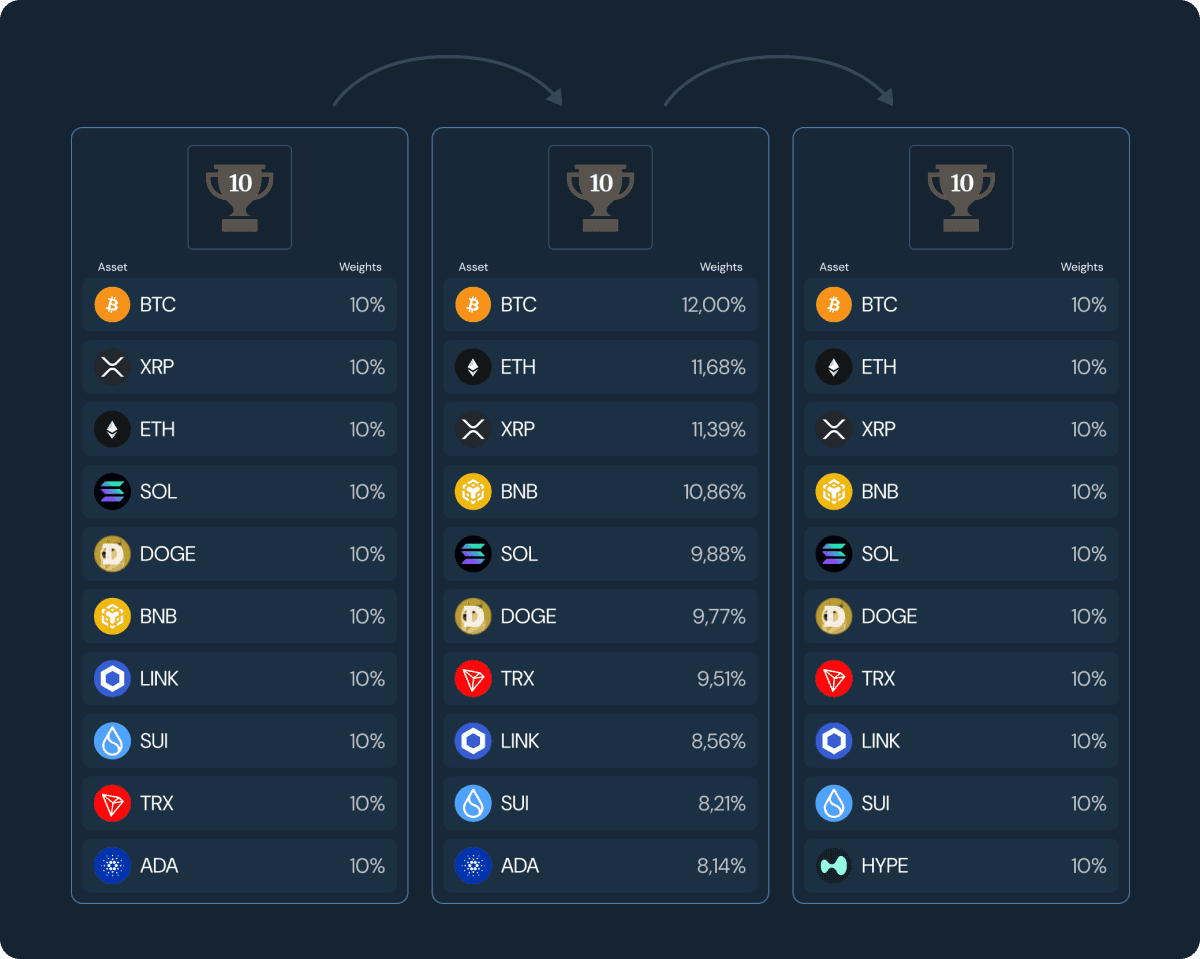
That matters in crypto because market leaders change quickly. Coins that looked important in one cycle can become much less relevant in the next. A crypto index that never updates can end up holding outdated assets while newer, stronger ones are left out.
Most crypto indexes rebalance weekly, monthly, or quarterly. Frequent rebalancing can create more trading activity and platform fees, while keeping the index better aligned. But done too often, it can increase user costs and reduce returns. The goal is to find the right balance - frequent enough to keep the index relevant, but not so frequent that trading costs hurt performance.
6. How indexes generate revenue
A platform can add different fee layers to an index product:
Entry and exit fees: charged when a user buys or sells the index.
Management (AUM) fee: a yearly fee on assets under management.
Performance fee: charged only on the profit a user makes.
Rebalancing fee: a small fee on the amount of coins swapped each time the index rebalances.
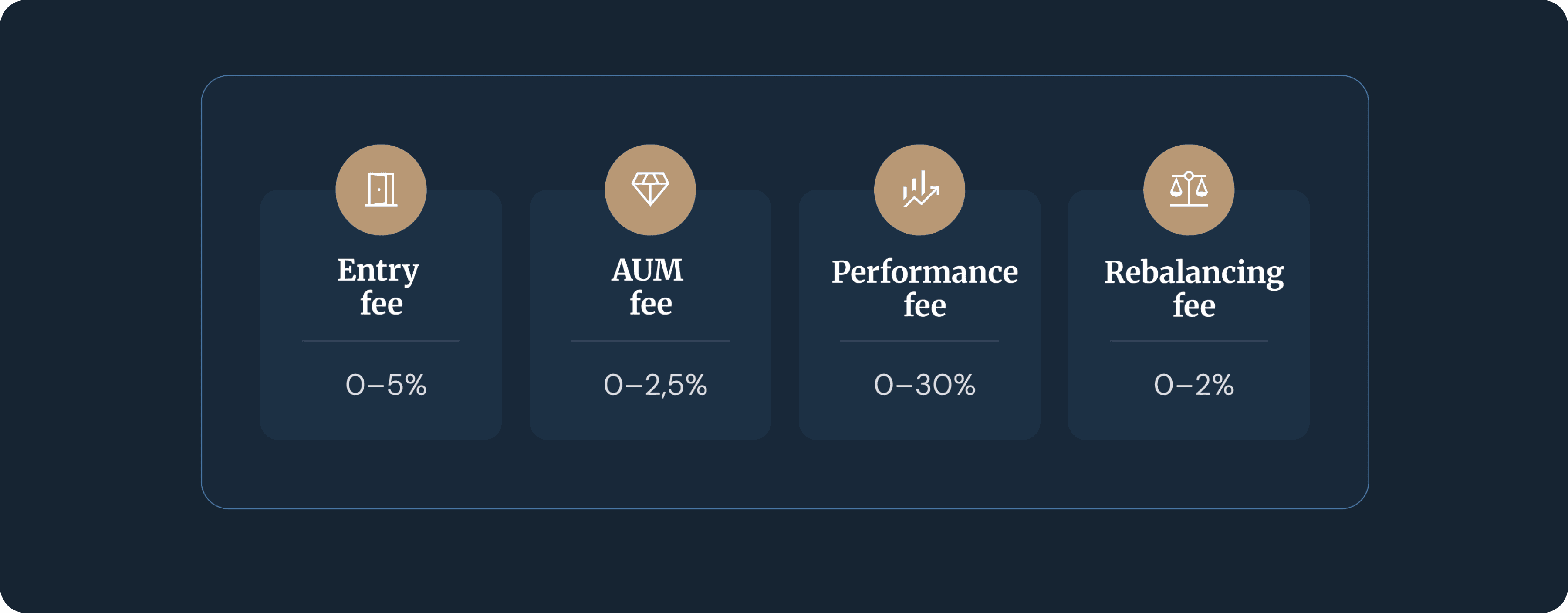
Fees can significantly affect how an index performs for users, which is why we work closely with our clients to model the right structure for their platform.
Why indexes work for both sides
For the platform: indexes turn passive, low-activity users into a recurring revenue stream. Because the product maintains itself, it generates fee activity even when users aren't actively trading - which makes it one of the few products that keeps earning during quiet markets and bear cycles. It's a way to monetize the user base you already have, without a heavier sales motion.
For the user: Crypto indexes are one of the simplest ways to get diversified exposure to a fast-moving asset class. Diversification helps reduce single-asset risk, while automatic rebalancing keeps the portfolio updated instead of leaving users exposed to coins that are no longer relevant.
It is clear why in
dexes are useful for both users and platforms. As the market grows, indexes are likely to become an important part of crypto adoption - both on crypto platforms and through ETFs or index-based products in traditional finance.
Launch a crypto index under your own brand with Abund
If this gave you an idea for your own index product, that is exactly where Abund comes in.
Abund helps crypto exchanges, brokers, banks, and wealth platforms launch crypto indexes under their own brand. We take care of the methodology, operations, and ongoing rebalancing, while you keep your users, your brand, and your share of the revenue.
From sector baskets to yield-blended strategies and broad-market indexes, our team can help you design and model the product before launch.
Schedule a call and let’s design your index product together.